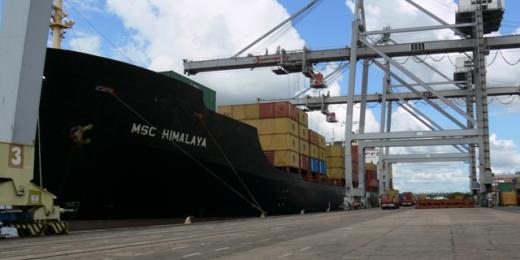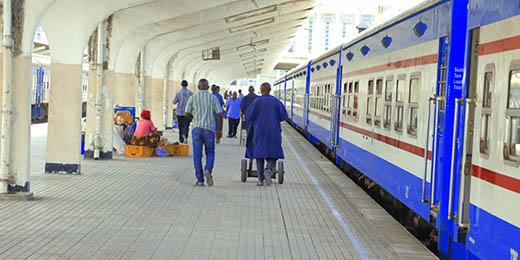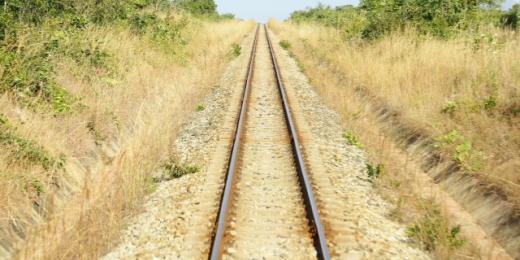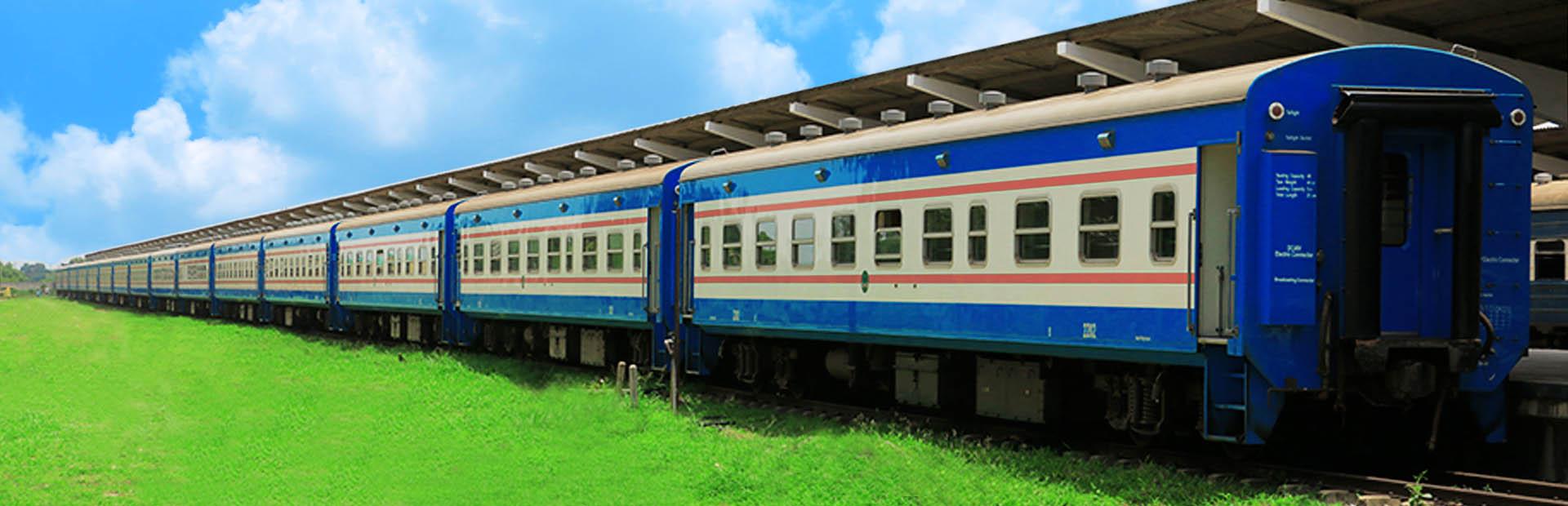
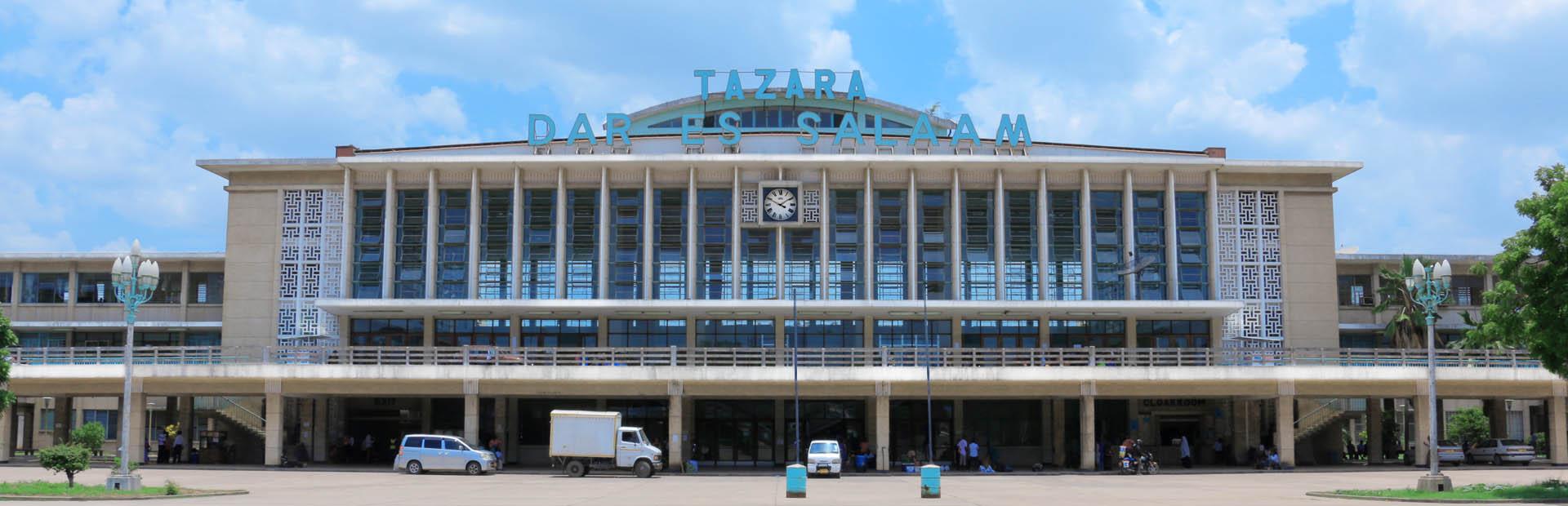
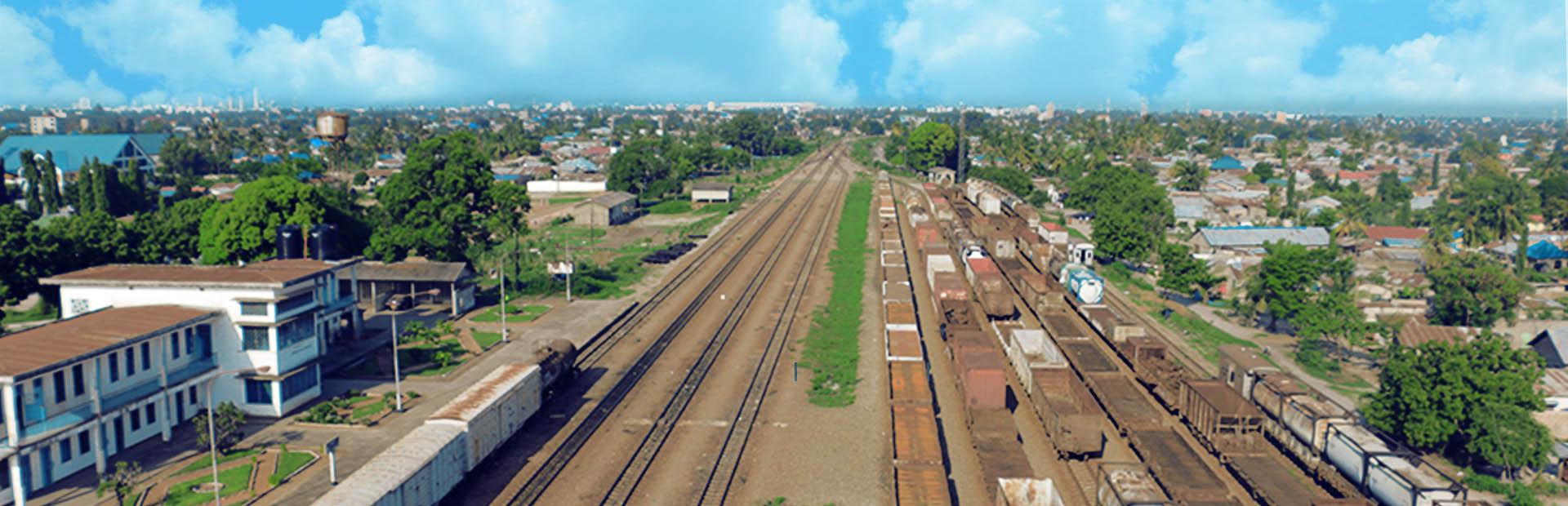
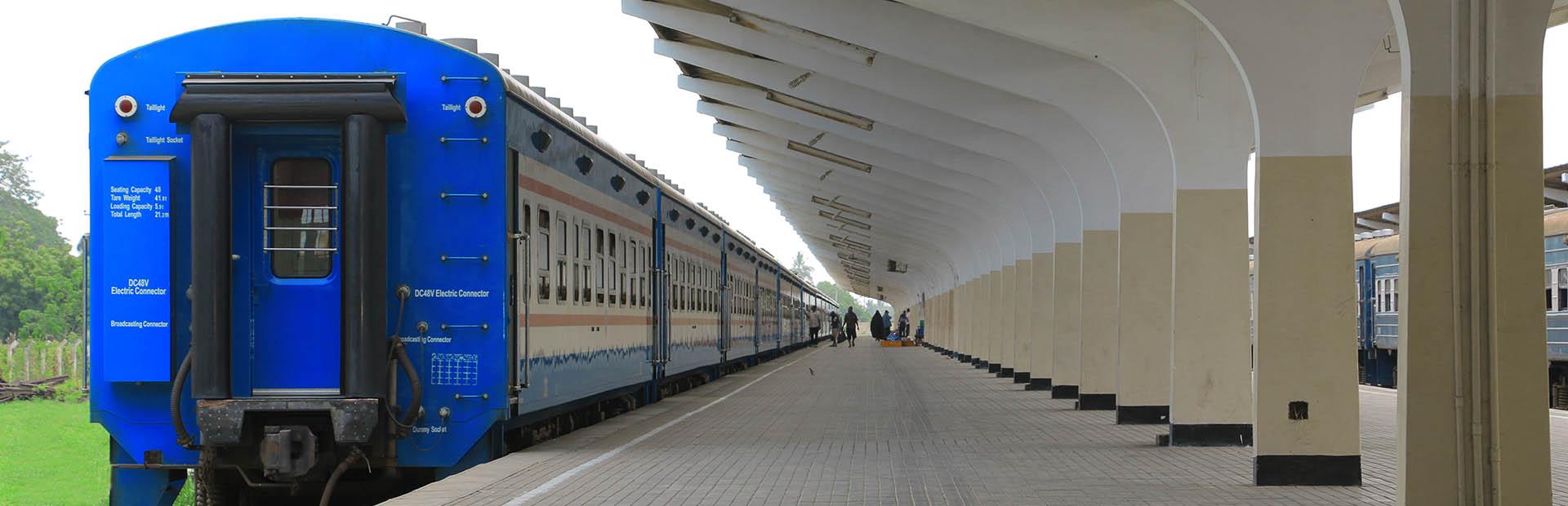
TAZARA is gateway to the Eastern, Central and Southern African business markets covering both the SADC and COMESA regional groupings, runs from the port of Dar es Salaam in Tanzania to the town of New Kapiri Mposhi in Central Zambia where it links with the existing Zambia Railways System. The gauge of the line is same at 1067 millimeters (three and half feet) as that of Zambia Railways as well as all the other main trunk lines in Central and Southern Africa. Excellent, this is the really Tanzania Zambia Railway Authority, your preferred Transporter.
Major Events
HISTORICAL MILESTONES
The Great Uhuru (Freedom) Railway (TAZARA), Zambia’s newst rail link to the sea coast symbolizes:
(a) The great and wise leadership of Late Presidents Julius Nyerere and Dr. Kenneth Kaunda who had foresight to realize what lay ahead not only for their new republics but the subcontinent as a whole in terms of economic and political independence. They visualized TAZARA as the only way out of the economic and political dependence and bondage as well as a tool for accelerated development hence initiated it. Without TAZARA, Zambia would not have been able to support the liberation struggles of Angola, Mozambique and Rhodesia (Zimbabwe). It is for this support that the hostile colonial regimes that reigned tyrannically did not hesitate to cut off Zambia’s links to the outside world – as visualized by Late President Julius Nyerere and Late Kenneth Kaunda – so as to intimidate her out of the frontline role. The rail and road routes through Rhodesia were cut in 1973 and the Benguela rail route was cut off in 1975. These actions were, however, ineffective as the Uhuru line, though much longer was ready for Zambia’s use in 1975, two years ahead of anticipated time. The struggles forged ahead resulting in freedom and independence for all the three countries.
(b) Heroism of both the Chines people, represented by their great engineers and workers and the Tanzanian and Zambian people through those of them who joined the Chinese for the construction of this unique railway. They were all not deterred by the hostile environment through which the line had often to pass, an environment which actually claimed many of them along the way. They worked day and night to complete this 1,860 kilometre modern line which includes 147 new stations, 320 bridges, 22 tunnels, 2,225 culverts, all in 1,687 days – two years ahead of schedule. This was an engineering fit of great historical significance.
(c) The folly of imperialism with its kith and kin policy and perhaps the all weatherness of socialist ideals. The line had since 1947 been on capitalist drawing boards and a number of capitalist oriented surveys undertaken, nearly all concluding that the line was unjustifiable economically because they realized its political implications particularly to their interest in the region. It was only the Socialist Peoples’ Republic of China who saw the wider necessity of the line and thus offered to finance and build it in 1967. They without hesitation commenced their own surverys in 1968 which was completed in 1969, disregarding all earlier surveys and conclusions. On 12 July 1970, an interest free loan repayable over a period of 30 years totaling Yen 988 million was agreed and signed between China on the one hand and Tanzania and Zambia on the other hand to cover the construction of the line and supporting infrastructure of stations and training and the supply of motive power and rolling stock. The local costs of construction were offset by proceeds from the sale of Chinese consumer goods purchased under commodity credit agreements shared equally by Tanzania and Zambia.
(d) On 26 October 1970, President Kenneth Kaunda of Zambia inaugurated the construction of the Tanzania-Zambia Railway Authority (TAZARA) in Dar es Salaam, Tanzania whilst two days later at Kapiri Mposhi, Zambia, President Mwalimu Julius Nyerere of Tanzania did likewise. The engineering difficulties involved in building the 1,860 kilometre long line were immense. Almost 89 million cubic metres of earth and rock had to be moved, 320 bridges, 22 tunnels and 2,225 culverts built, a lot of work being in the most inhospitable terrain. In fact over 160 workers including 64 Chinese died during the construction of the railway. However, work proceeded ahead of schedule and on 27th August 1973, President Kaunda and Nyerere witnessed the track laying reaching the Zambian border at Nakonde, during the same year, a limited amount of Zambian traffic was being transported over the first 700 kilometres from Dar es Salaam, with road transport being used for the rest of the journey. Use of the completed section of TAZARA increased and on 7th April 1974 the first train was hauled into Zambia by two locomotives. This carried a load of Swedish timber which was off loaded into road transports at Mwenzo (about 11 kilometres from the border). Track laying was completed on 7th June 1975 and on 21st October 1975, the first train over the full length of TAZARA arrived at New Kapiri Mposhi carrying guests for the ceremony held at New Kapiri Mposhi on 23rd October 1975 to commemorate the completion of track laying and the start of trial operations. On 22nd October 1975 (the day before), the first public passenger train on TAZARA left New Kapiri Mposhi for Dar es Salaam while the first public working in the opposite direction left Dar es Salaam on 26th October 1975. The trial operations continued until full operations commenced in July 1976, preceded by another ceremony being held at New Kapiri Mposhi on 14th July 1976 to commemorate the inauguration of railway operations and the handing over of the railways to Tanzania and Zambia by the Peoples’ Republic of China.
xxxxxxxxxxxxxx
Back on 14th November, 1969
Agreement between the three countries i.e. China, Tanzania and Zambia placing the terminal of the railway in Dar es Salaam instead of Kidatu.
xxxxxxxxxxxxxxxxxxx
Who started, Financed and Built TAZARA and for what purpose?